Project Overview
Role
Product Designer
Project Duration
12 Weeks
Smiling Minds, an Australian not-for-profit mental health organization, aims to diversify its offerings beyond mindfulness meditations. The goal was to introduce a comprehensive “mental health fitness” approach, expanding support to a broader audience beyond mindfulness enthusiasts. The strategic shift aimed to provide a holistic toolbox of evidence-based activities to enhance the well-being of individuals of all ages, including families, school groups, and workplaces.
Challenges and Objectives:
- From: Core focus on mindfulness, reliant on specific user types.
- To: A diverse toolkit of evidence-based tools for everyone, fostering a cumulative effect on well-being.
Objectives:
- Conduct UX research on successful apps with a strong learning component.
- Explore engaging learning experiences.
- Investigate integration of learning activities into the overall UX.
- Analyze the combination of learning content with practical skill application.
- Explore potential inclusion of parents and children engaging in mental health fitness activities together.
- Research user expectations in educational app experiences.
- Identify core features and “nice-to-have” elements.
- Examine past digital learning experiences, assessing success factors.
- Design a concept for the Smiling Mind app’s learning experience.
- Reflect findings from research to meet project objectives.
Interpretation of Brief and Goals:
Understanding Smiling Mind’s goals was paramount. The project aimed to create an adaptable and scalable app, introducing new formats and features. Engaging learning activities were crucial to support both existing and new users. The vision focused on building preventative mental health skills, emphasizing a positive impact on Australian mental health over profit. While expanding into helping children and teenagers was a desire, the project would initially impact young minds through parents and educators.
Outcome:
The project, led by me as the product designer, aims to transform the Smiling Mind app into a scalable and adaptable platform. It will empower users to build preventive mental health skills through a diverse range of engaging and evidence-based activities.
User Research: Unveiling Desires and Key Insights
To determine what would be a successful product for Smiling Mind’s new vision, competitor analysis and user interviews were conducted.
Key Insights:
- Simplicity:
- Users favored a simple interface with fewer features.
- Reasons included easier navigation, avoiding information overload, and ensuring users felt they could fully benefit from the app.
- Reward System:
- A desire for a rewarding system emerged as a key theme, suggesting users find motivation and satisfaction through a structured reward system.
- Small Information Chunks:
- Users expressed a preference for receiving information in small, digestible chunks.
- This approach was seen as more manageable and conducive to effective learning and application.
- Personalization:
- Personalized experiences were highlighted as significant, emphasizing the need for tailored content to individual preferences and needs.
These insights gleaned from the interviews became an important part of ideation for the design process.
Ideation & Design Process
In reshaping the Smiling Minds app for a comprehensive mental health approach, the design process was a journey of innovation and experimentation. The approach encompassed:
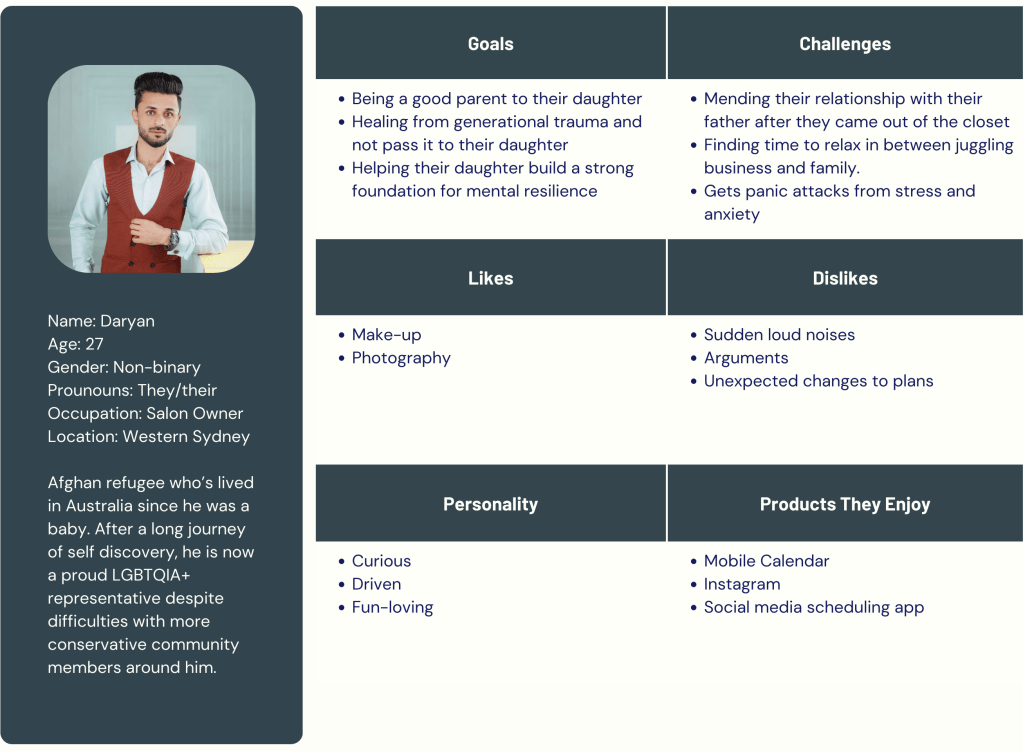
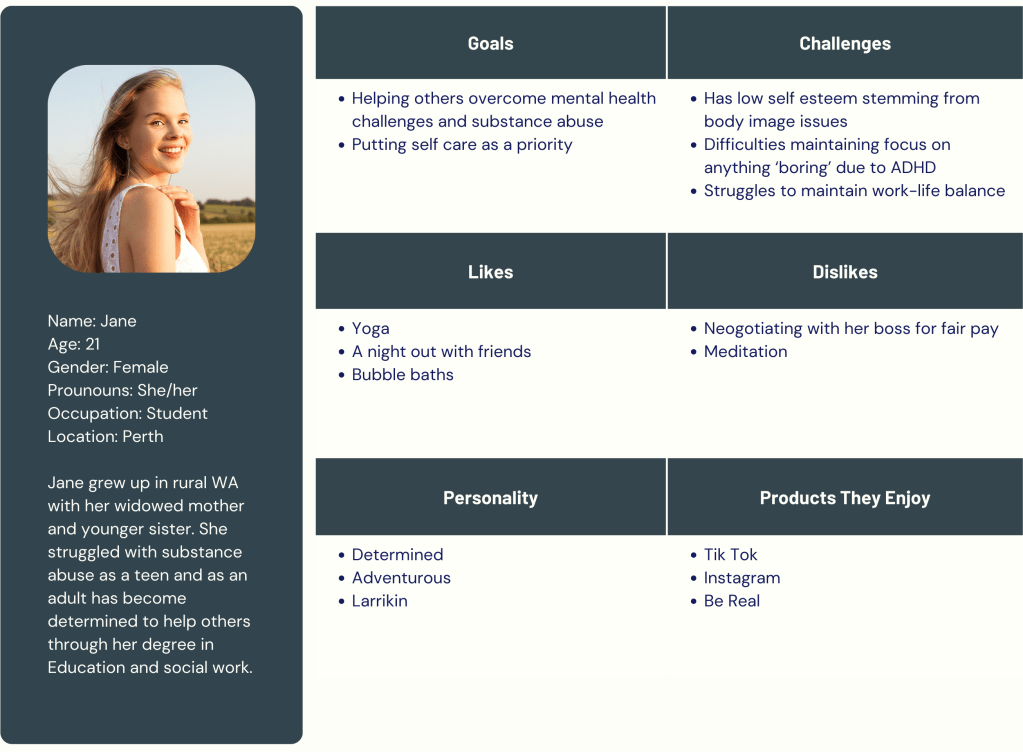
- Customer Journey Mapping:
- Two user personas were created to mirror the diverse Australian population that Smiling Minds aims to cater for.
- Creating customer journey maps based on the personas to identify opportunities.
- Brainstorming and Creativity:
- The user personas and customer journey mapping provided an outline to focus creativity for the design of mental wellness activities and layout of the app.
- Techniques like brain dumping encouraged a free flow of ideas and “wacky” concepts, to explore unconventional yet impactful design elements.
- The most marketable ideas were then transformed into paper prototypes.
- Paper Prototypes:
- Preliminary design concepts were translated into tangible paper prototypes, facilitating a tangible understanding of the app’s potential flow.
- Preliminary design concepts were translated into tangible paper prototypes, facilitating a tangible understanding of the app’s potential flow.
- Digital Prototype:
- A detailed prototype was developed to emulate the anticipated app’s user flow, serving as a valuable tool for seamless user testing.
- A detailed prototype was developed to emulate the anticipated app’s user flow, serving as a valuable tool for seamless user testing.
- UI & Graphics:
- While UI elements were not the primary focus due to time constraints, the prototype is aligned with Smiling Minds’ brand image.
The ideation and design process thoroughly considered insights revealed from user research to develop a product that would suit Smiling Mind’s diverse target audience.
Enabling Personalisation for Exceptional User Experience
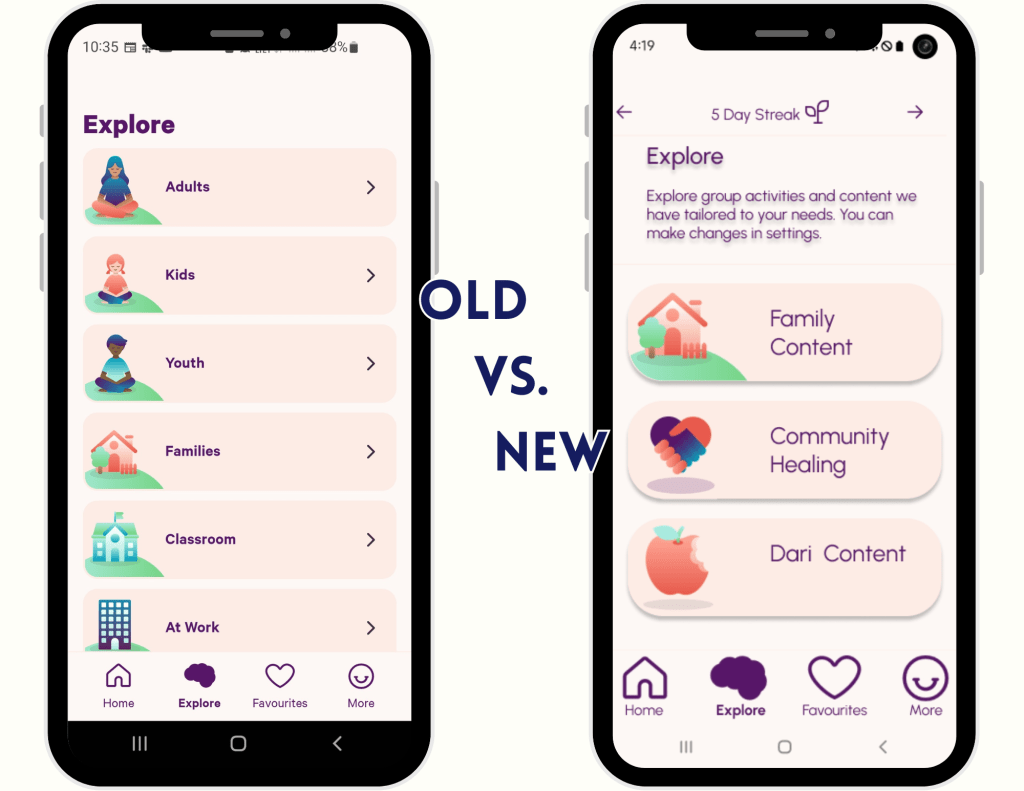
Our user interviews revealed that a majority of people value personalised experiences, but how do we go about creating this experience? Smiling Minds gathers information about their users from the start of the onboarding process, however the information gathered has not utilised to create personalised experiences.
1. User-Centric Onboarding: Tailoring Smiling Minds’ Experience
During the onboarding process, information collected serves as a foundation for delivering a personalized journey within the Smiling Minds app. The existing app already demonstrates inclusivity by offering meditations for various user categories, including adults, teens, children, educators, parents, professionals, and healthcare workers.
Elements Included in the Original Onboarding Process:
- Gender Identification (options: male, female, non-binary, prefer not to say).
- Age Determination (without requiring the exact date of birth).
- User Role Selection (individual, parent, educator, healthcare worker, or professional).
- Exploration of Mental Health Areas users wish to focus on.
Enhancements for a Robust Onboarding:
- Language Preference as a Priority:
- Initiating the onboarding process with language preference ensures a more personalized experience.
- Smiling Minds offers meditations in various languages (Arabic, Dari, Kriol, Ngaanyatjarra, Pitjantjatjara), and allowing users to set their language preference from the outset enhances personalization.
- User Account Creation:
- Incorporating a step to gather essential user details (name, email, date of birth) facilitates the creation of an individual account.
- Alternatively, providing login options through popular platforms (Facebook, Instagram, Google) offers user-friendly convenience.
Strategic Considerations:
- Placing language preference at the forefront aligns with Smiling Minds’ commitment to diverse linguistic communities.
- Streamlining user account creation through familiar platforms ensures a seamless and efficient onboarding experience.
By integrating these refinements into the onboarding process, Smiling Minds can not only elevate personalization but also prioritize user convenience and inclusivity from the very first interaction.
2. Elevated Wellbeing Check-in
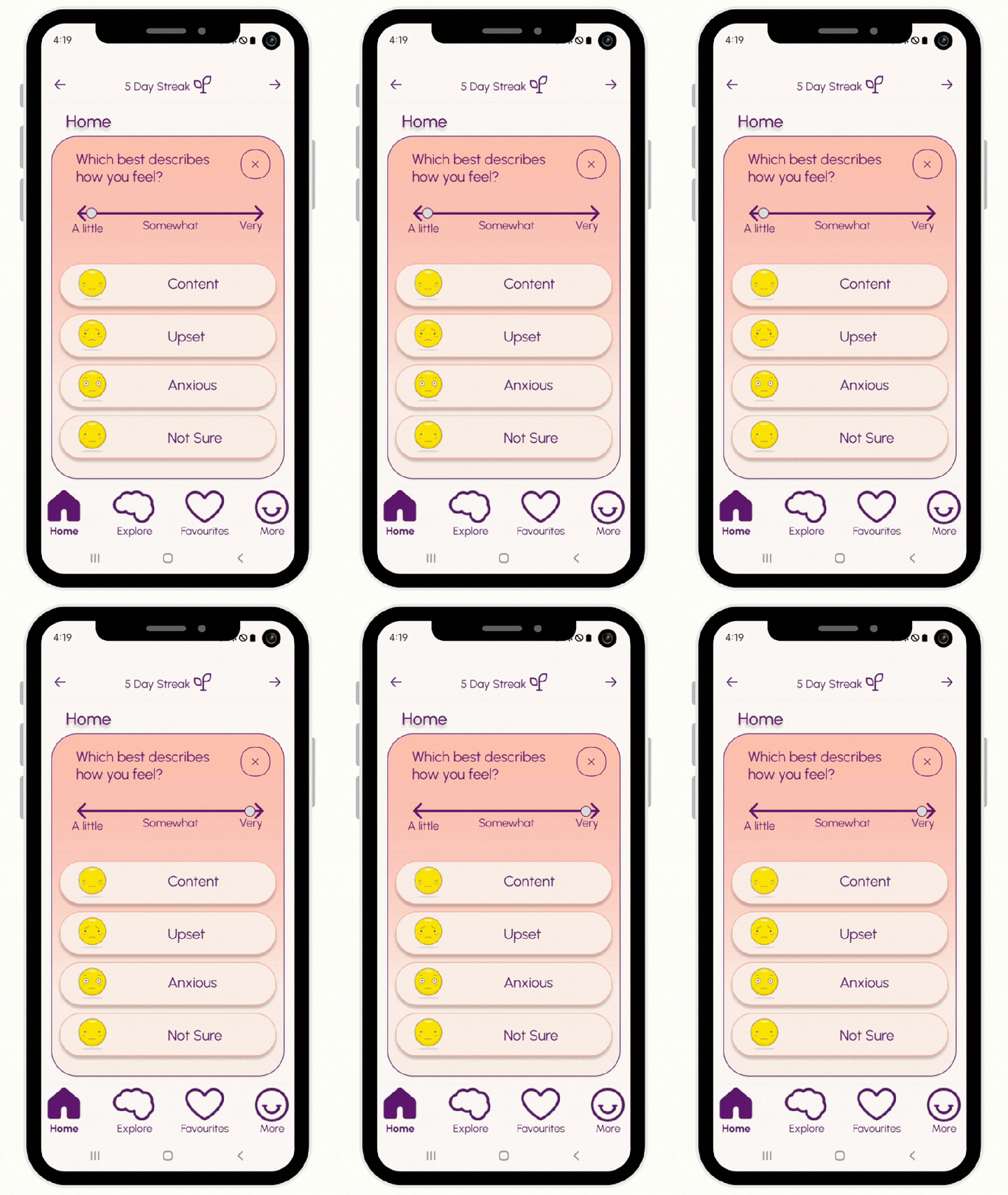
The Smiling Minds app already incorporates a valuable feature, the wellbeing check-in, designed to assist users in consciously acknowledging their emotions—a crucial step toward enhancing mental fitness.
The proposed upgrade in my design introduces:
- Emotional Scale:
- Users can now effortlessly slide on a scale ranging to articulate the intensity of their emotions.
- Tailored Activity Suggestions:
- Based on the user’s self-reported level of calmness or distress, the app can offer specific activities catered to their emotional state.
- Post-Activity Check-In:
- Following each activity, users are prompted to conduct another wellbeing check-in, allowing them to assess changes in their emotions. This feature becomes particularly beneficial if they initially reported feeling distressed.
- AI-Driven Insights:
- Leveraging collected user data, artificial intelligence (AI) can analyze which activities were most effective for an individual during distress. Consequently, the app can intelligently recommend specific activities the next time the user indicates distress.
This enhancement not only empowers users to actively engage with their emotional well-being but also harnesses the potential of AI to provide personalized and effective mental health support based on individual experiences.
3. Advancing Language Accessibility
While Smiling Minds has established infrastructure for crafting meditations in various languages, the current app showcases language options solely within specific meditations.
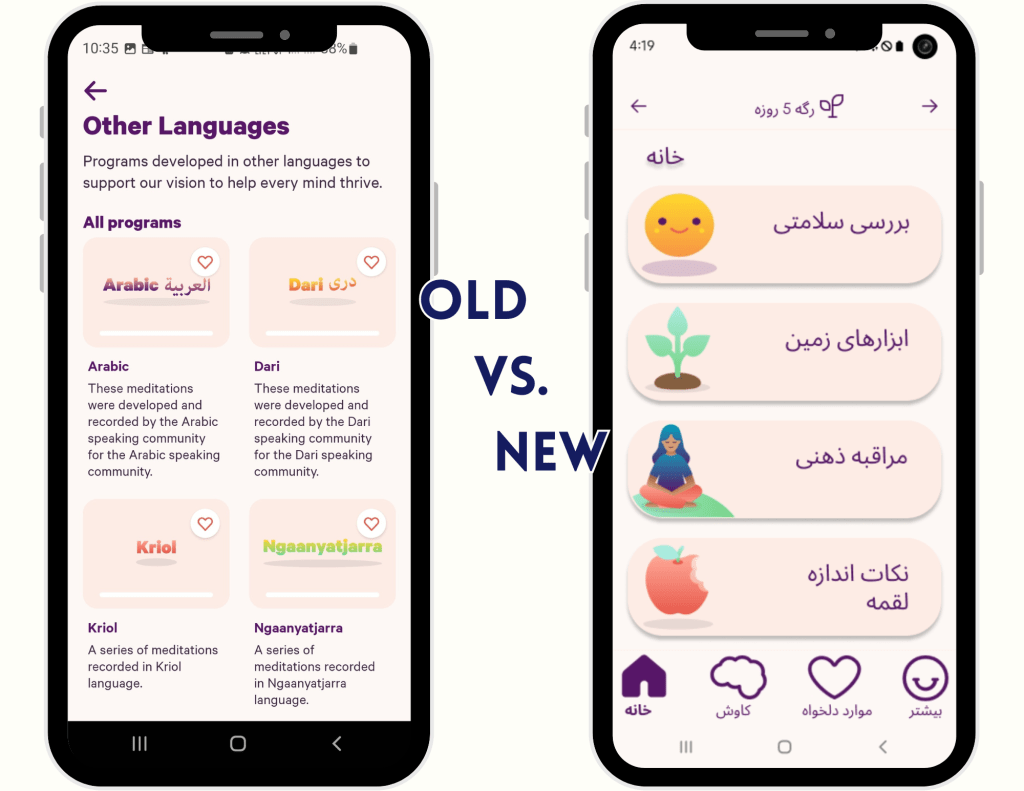
Recognizing Smiling Minds’ proficiency in translating content, a crucial enhancement involves:
- Comprehensive App Translation:
- Leveraging the existing translation capabilities, the entire app should be translated into the diverse languages offered for meditations.
This strategic improvement is paramount for:
- Enhanced Inclusivity:
- Ensuring individuals with limited proficiency in English have full access to the app, fostering a more inclusive mental wellness experience.
- Wider User Reach:
- Facilitating a broader audience reach by breaking language barriers, thereby extending the benefits of mental health resources to diverse linguistic communities.
Engaging Mental Wellness Activities
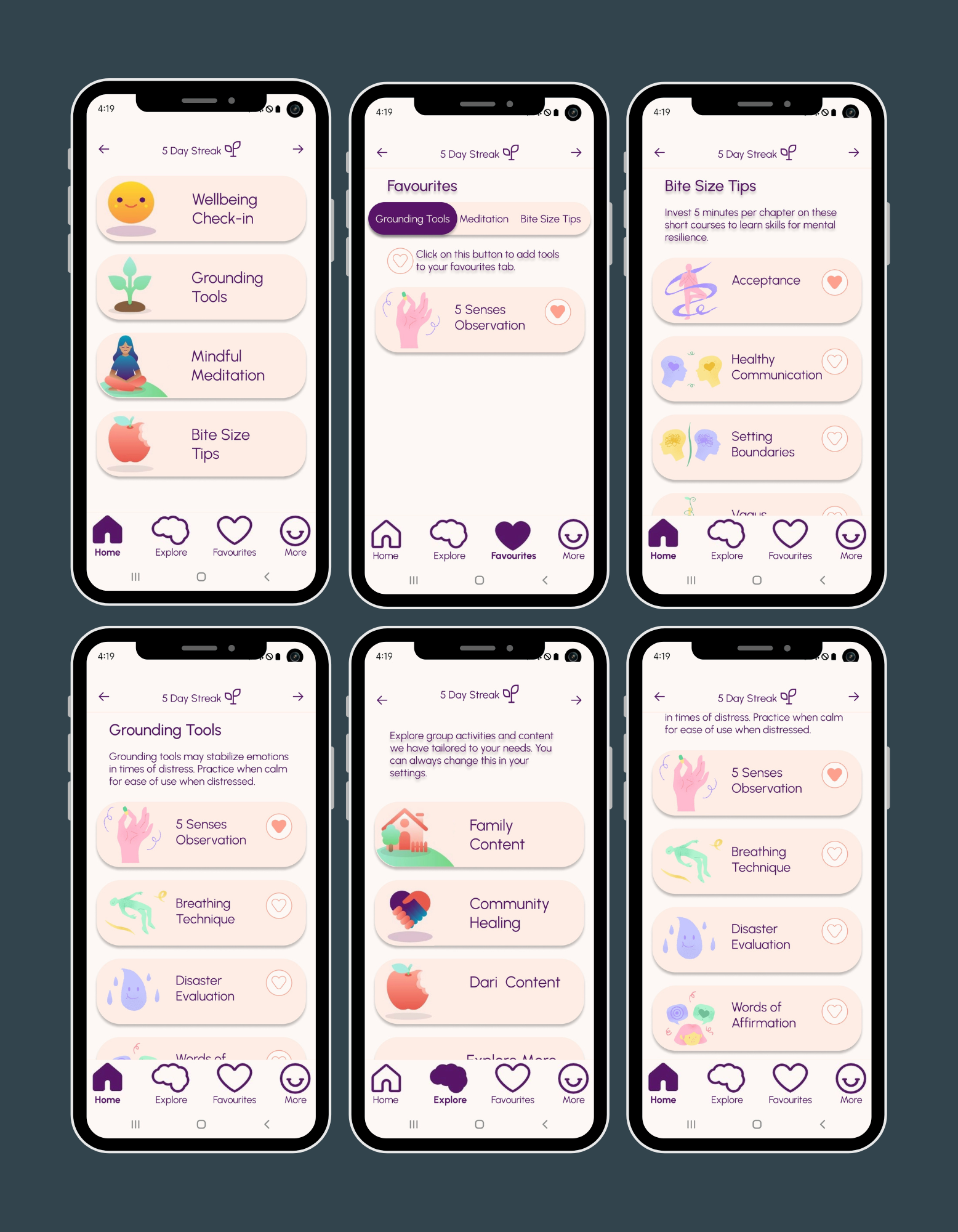
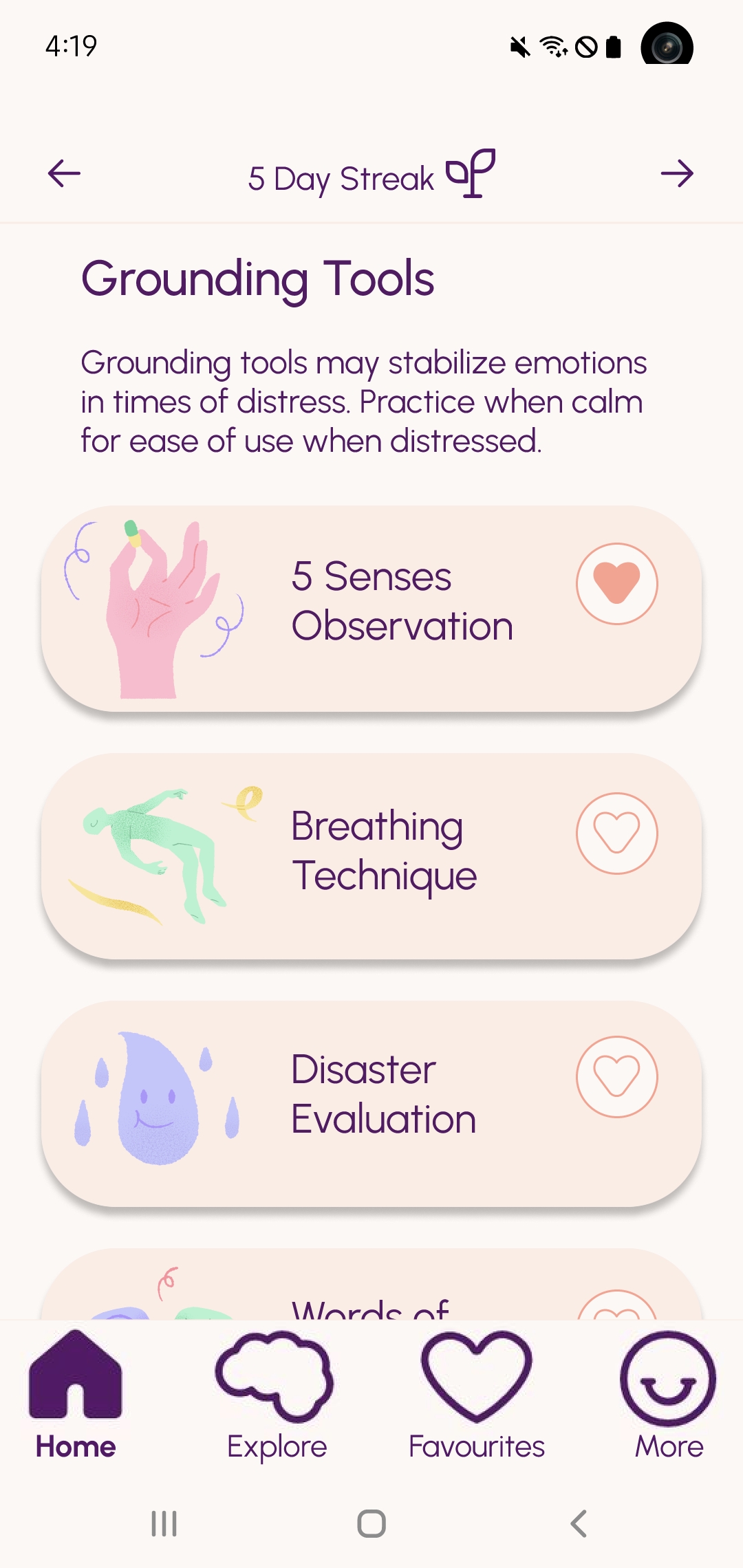
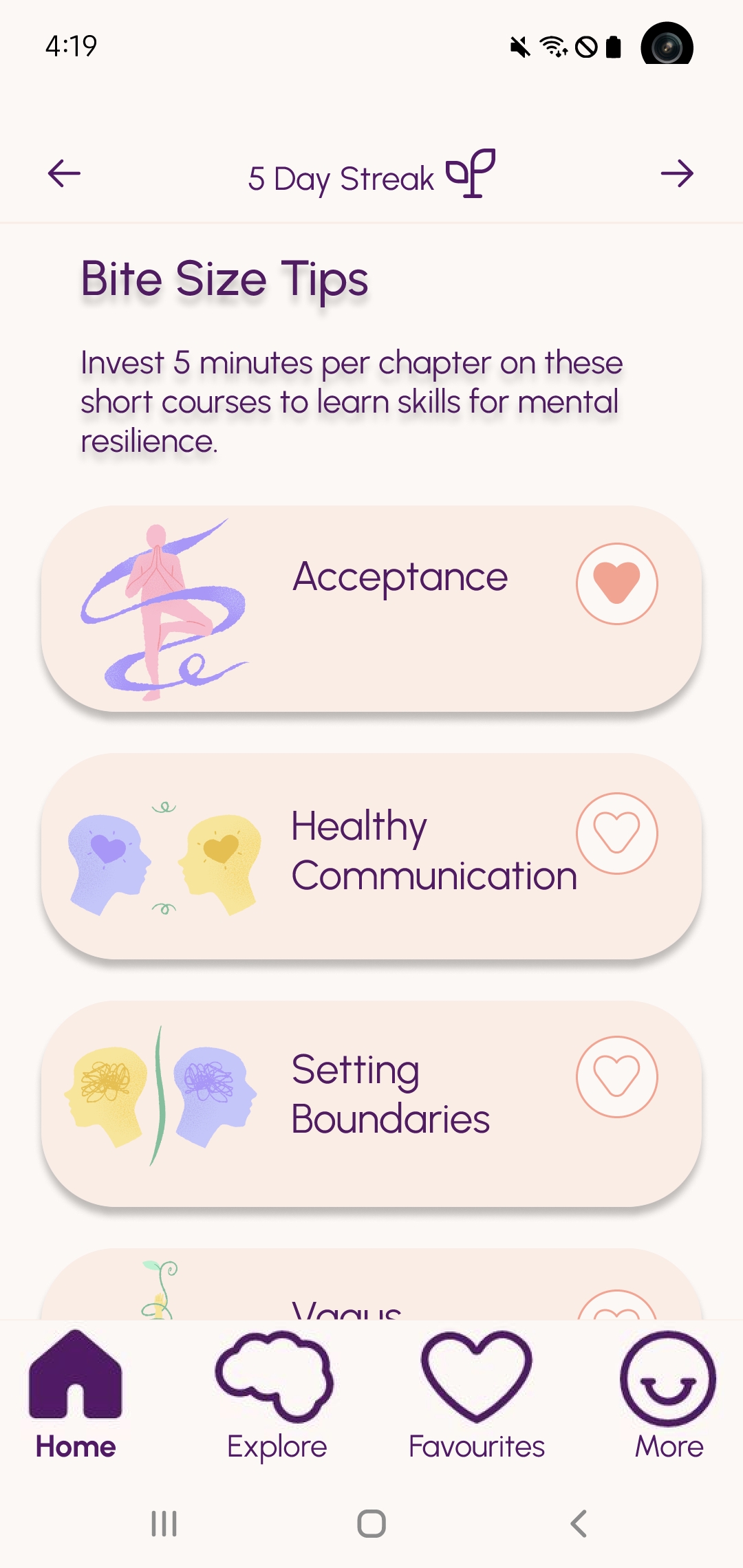
In alignment with Smiling Mind’s commitment to a comprehensive mental health fitness approach, a pivotal design choice involves delivering mental health activities in easily digestible chunks. Drawing inspiration from evidence-based therapies like DBT and CBT, I’ve introduced two dynamic tools: Grounding Tools and Bite-Sized Tips.
1. Grounding Tools
Designed to provide immediate grounding during moments of intense emotional distress, these tools balance appealing images and clear instruction for optimal user engagement.
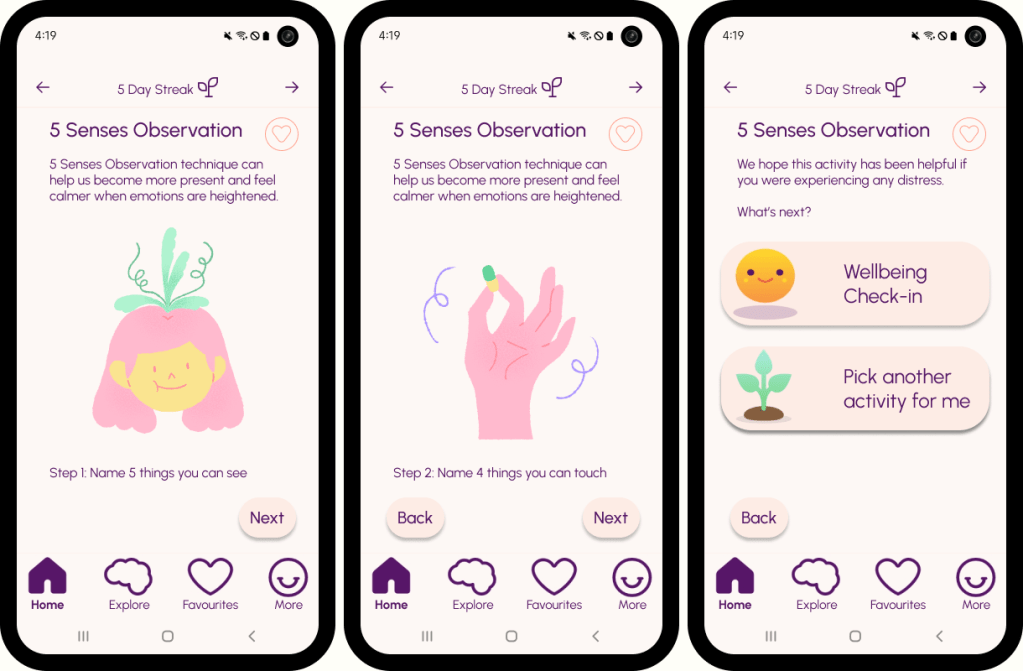
- Practice and Favorite:
- Users are encouraged to practice these tools when calm, establishing a familiarity that aids in effective application during distress.
- The star button, acting as a favorite option, enables users to bookmark preferred tools for quick access when needed.
- Smart Data Utilization:
- Through data collection, Smiling Minds gains insights into users’ practice patterns when calm.
- The app intelligently suggests specific tools during the Wellbeing Check-In if heightened emotions are detected, ensuring a personalized and timely intervention.
2. Bite-Sized Tips
This segment comprises practices geared towards long-term mental health improvement. Unlike on-the-go tools that aim to provide immediate relief to emotional distress, this would require personal reflection when the user is in a calm state.
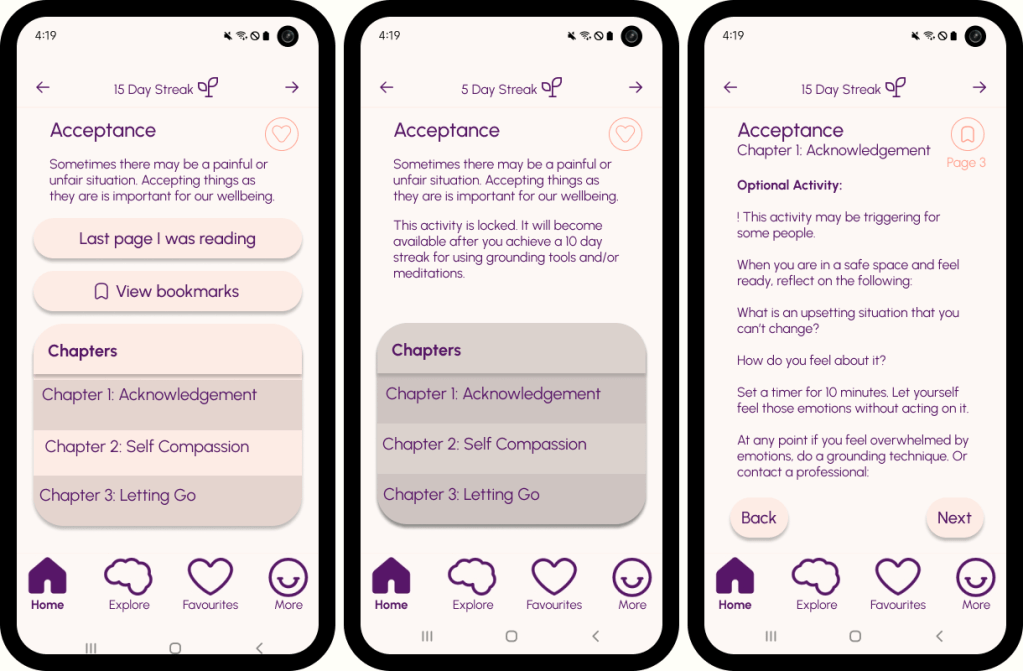
- Favourites and bookmarks:
- Similar to Grounding tools, a heart button will allow users to favourite any activities they find useful to their long term mental wellness journey.
- Bite Size Tips is designed to mimic a book with different chapters. A bookmark button will be available on each page so that users can refer to any particular “page” they found useful in their favourite bite size tip.
- Data-Driven Guidance:
- Leveraging data collection, the app identifies incomplete activities.
- Recommendations are tailored based on users’ calm self-reports during the Wellbeing Check-In, prompting users to revisit and engage with these activities for sustained mental well-being benefits.
By presenting mental health activities in easily manageable portions, this approach not only aligns with therapeutic methodologies but also ensures user-friendly accessibility, promoting consistent engagement for lasting mental health benefits.
Incentivizing Consistency: The Streak System
Insights gleaned from user interviews and a comprehensive competitor analysis, particularly with Duolingo, underscored the pivotal role of a rewards system in sustaining user motivation and engagement.
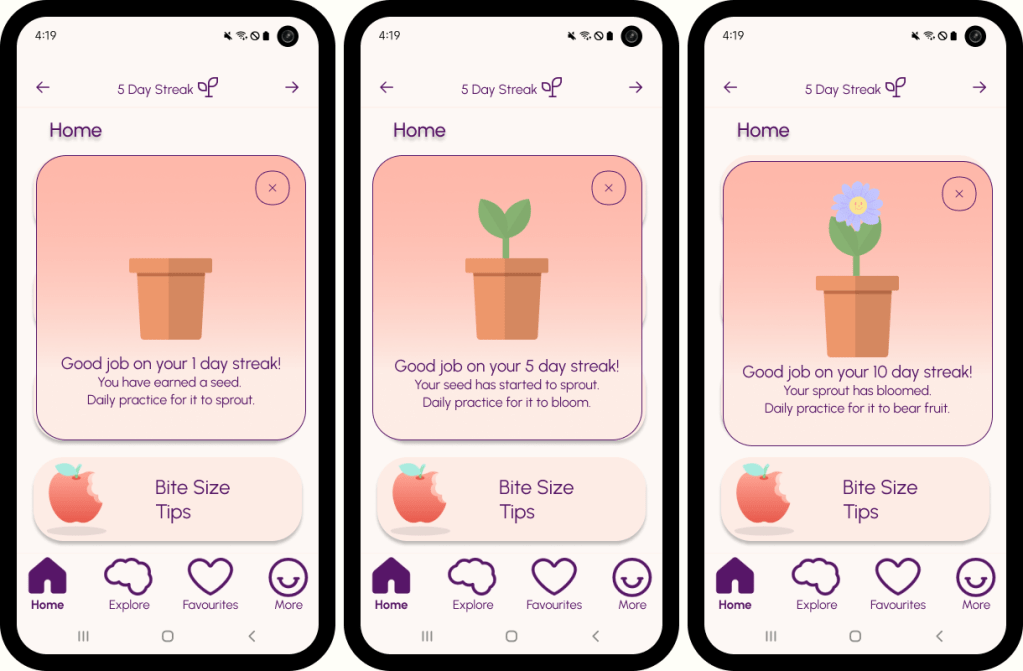
Streak System Inspiration
Taking a cue from Duolingo’s successful streak system, the concept of encouraging users to maintain a consistent practice became a focal point. Duolingo’s streak system effectively motivated users to uphold a daily language practice routine. Leveraging this proven strategy, Smiling Mind aims to implement a similar streak system to incentivize users to engage in mental wellness activities on a daily basis.
Tailoring to User Habits
It’s worth noting, as revealed in the client interview, that the majority of active users typically engage with the app between three times a week and a few times a month. Acknowledging this usage pattern, the streak system emerges as a strategic motivational tool, designed to encourage daily participation in Smiling Mind’s mental wellness activities. This approach aims to infuse a sense of consistency, ultimately contributing to a more habitual and impactful mental fitness journey for the users.
User Testing: Navigational Ease and User Autonomy
Navigational Assessment: Empowering Users Through Autonomy
The user testing phase was meticulously designed to gauge the app’s navigational intuitiveness and the users’ ability to explore functionalities independently. The testing process comprised a series of tasks aimed at evaluating different aspects of the user experience.
Testing Steps:
- Onboarding Process:
- Users initiated the app and underwent the onboarding process.
- Assessment of ease in navigating through the initial setup.
- Error Handling:
- Users were informed of a mistake on the 3rd page, testing their ability to backtrack and rectify errors.
- Exploration Time:
- A 5-minute exploration window allowed users to familiarize themselves with the app’s layout and features independently.
- Well-being Check-In:
- Users performed a well-being check-in, evaluating their ease in engaging with this core app feature.
- Activity Engagement:
- Users decided whether to click on suggested activities during the well-being check-in, measuring intuitive engagement.
- On-the-Go Tools:
- Encouraged users to explore the On-the-Go Tools section, focusing on their autonomy in choosing an activity.
- Grounding Technique:
- Users navigated the 5 senses grounding technique, assessing the app’s guidance without undue pressure to complete the entire activity.
- Bite Size Tips:
- Users clicked on Bite Size Tips, engaging with activities to evaluate the accessibility and clarity of this section.
- Acceptance Activity:
- Users tried the Acceptance activity, providing insights into the app’s effectiveness in guiding users through specific exercises.
- Reminder Setting:
- Users were prompted to set a reminder, testing the clarity and user-friendliness of this feature.
- Family Content Exploration:
- Users navigated to find content suitable for families, assessing the app’s inclusivity of diverse user groups.
- Educator Content Discovery:
- Users explored content designed for educators, evaluating the accessibility of resources for this specific user category.
User Autonomy and Insights:
- Independence Emphasis: Users were encouraged to articulate their thoughts aloud, emphasizing independent decision-making.
- Task Difficulty Response: No assistance was provided, allowing us to gauge users’ resilience and adaptability to varied tasks.
Evaluation Focus:
- Onboarding Clarity: Assessing the ease of navigating the initial setup and onboarding process.
- Error Resolution: Testing users’ ability to rectify mistakes and continue seamlessly.
- Autonomous Exploration: Gauging how well users could explore and engage with the app without explicit instructions.
Outcomes:
The user testing phase provided valuable insights into the app’s navigational strengths and areas for improvement. Majority of users seem to navigate the prototype with ease, suggesting that the app’s layout is good. However, further clinical testing should be used to determine the suitability of the content explored in the Bite Size Tips for individual consumption.
Conclusion
Embarking on the redesign journey for the Smiling Minds app was a compelling exploration into the intersection of user experience, mental wellness, and inclusivity. Through meticulous user interviews, data analysis, and thoughtful consideration of diverse user personas, the aim was not merely to refine an app but to revolutionize the approach to mental fitness.
A Holistic Vision for Mental Wellness
The endeavor started with a clear understanding of the profound impact mental health has on diverse communities. It unfolded into a vision for a holistic mental wellness app, one that not only addresses the distinct needs of individuals but also extends its embrace to parents, educators, healthcare workers, and professionals.
User-Centric Design Philosophy
The user-centric design philosophy guided every decision, from enhancing the onboarding process to creating personalized experiences. The introduction of language preferences at the forefront, streamlined account creation, and the incorporation of a streak system all stem from the commitment to simplicity, accessibility, and user motivation.
Inclusivity Beyond Boundaries
Recognizing that mental health transcends demographic boundaries, the focus on inclusivity extended to understanding the unique challenges faced by various groups. Insights from BIPOC individuals, refugees, and indigenous communities illuminated the necessity for culturally sensitive content and community-oriented healing. The redesigned app aspires to bridge these gaps, fostering a sense of belonging and support.
Micro-Interventions for Macro-Impacts
The introduction of “On-the-go tools” and “Bite-Size Tips” aims to transform mental wellness activities into manageable, actionable steps. Drawing inspiration from proven therapeutic methods, the design envisions micro-interventions that users can seamlessly incorporate into their daily lives, fostering resilience and long-term well-being.
Motivation Through Consistency
The streak system, inspired by successful models like Duolingo, emerges as a motivational cornerstone. Tailored to accommodate varying user habits, it strives to instill a sense of daily commitment, transforming mental wellness into a habitual practice rather than an occasional endeavor.
Towards a Brighter Mental Fitness Future
As the redesign journey concludes, the vision for Smiling Minds transcends being just an app; it aspires to be a steadfast companion on the collective journey toward enhanced mental fitness. The fusion of personalized experiences, cultural sensitivity, and innovative features sets the stage for a brighter future where mental well-being is not just a destination but a continuous, empowering journey for all.
 Vanessa Chow Designs