Project Role: UX Researcher
Length of Project: 7 weeks
Client: St. Vincent de Paul
Background
I led a research project for St. Vincent de Paul (Vinnies), a not-for-profit organization dedicated to supporting people in need. The project focused on optimizing the volunteer experience, particularly in the context of their retail stores that generate charity funding through the sale of second-hand clothing.
In this initiative, I addressed the dynamics within Vinnies’ retail stores, where a dedicated team of paid staff and a large group of volunteers, including passionate “bona fide” individuals, collaborates to support the organization’s cause. Additionally, there are volunteers who are there under Centrelink obligations or RTO training.
Vinnies also have paid staff which includes retail managers and supervisors (known as team leaders). They often need to spend some time to train up volunteers before the volunteers are able to effectively work independently in store. It is in Vinnie’s best interest to retain these volunteers.
The primary goal was to address the challenge of volunteers transitioning to paid roles within Vinnies. I led a collaborative research project with the Harness Projects team to explore strategies for enhancing volunteer retention.
Over a 7 week period I collaborated with the Harness Projects team to explore strategies for enhancing volunteer retention. While I led the research project, there was a collective effort in conducting interviews. Throughout the research project, there have been various obstacles that have limited the scope of the research but I have adapted to unexpected changes and obstacles.
Adapting To Evolving Objectives
In the early stages of the project, the initial brief from Vinnies set forth specific questions aimed at understanding volunteer pathways to full-time employment and the factors motivating volunteers. However, during the stakeholder interview and subsequent discussions, it became evident that the practical feasibility of the original focus was misaligned with Vinnies’ immediate goals.
Navigating these challenges required strategic adaptability, prompting a thoughtful reassessment of the research scope to ensure that the insights generated would be both valuable and actionable for Vinnies.
The initial questions posed were:
- How might we improve the pathways to full-time Vinnies employment from our volunteer cohort?
- What are the key factors that motivate/inspire Vinnies volunteers to consider full-time employment?
- What digital recommendations can support the engagement of volunteers and reveal supportive pathways to full-time employment with Vinnies?
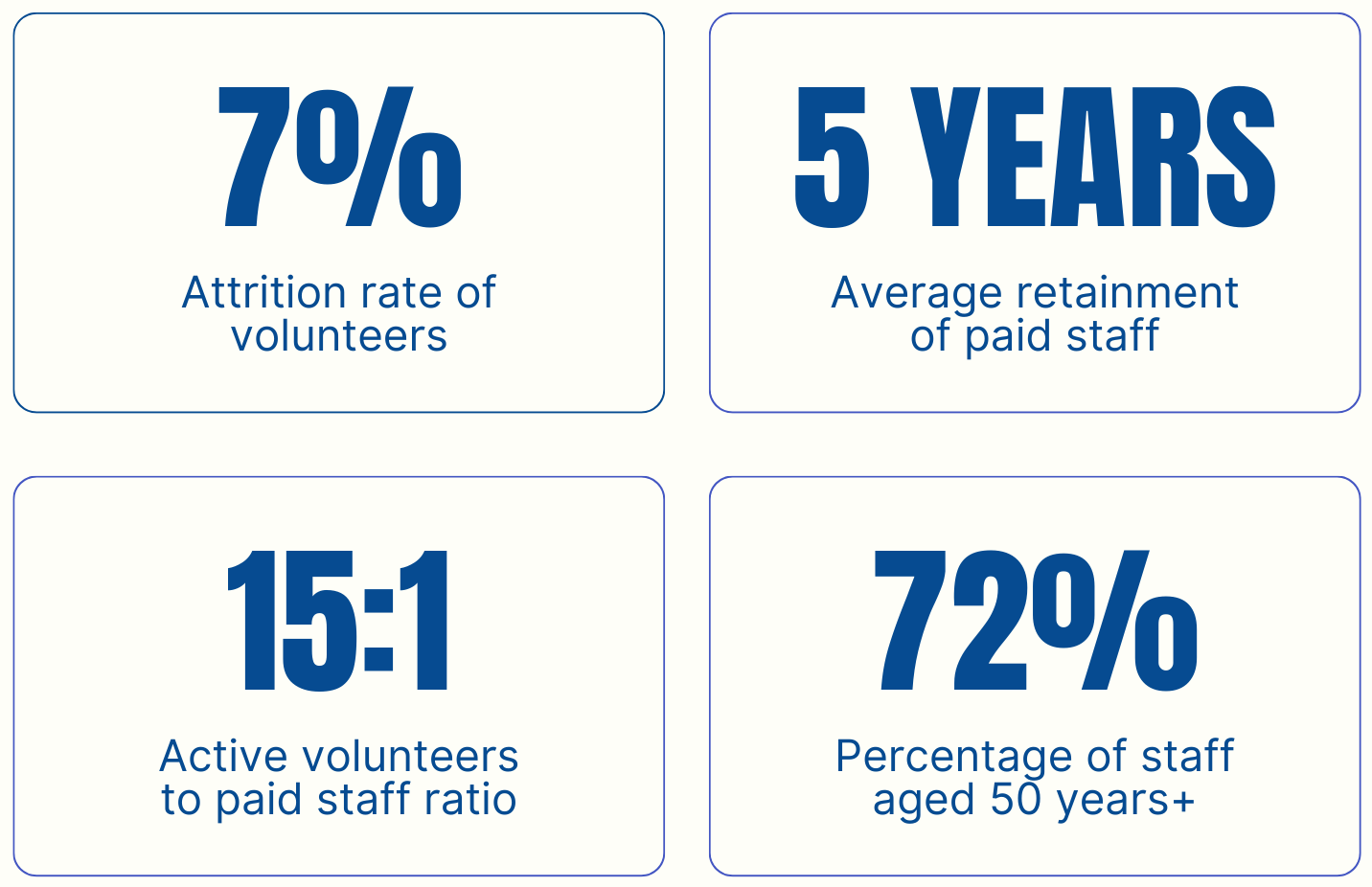
As additional data and insights emerged, a crucial shift occurred. Statistics provided by St. Vincent de Paul, including a significant 15:1 ratio of active volunteers to paid staff and an average five-year tenure for paid staff, underscored a contradiction between Vinnies’ aspiration to increase volunteer-to-paid positions and the limited availability of paid roles.
Following discussions with Vinnies, a mutually beneficial question emerged as the new research focus:
How can we create the most value for volunteers at Vinnies?
This pivot in the research scope allowed for a more targeted exploration of strategies to enhance the volunteer experience, providing Vinnies with actionable insights aligned with their immediate goals and overarching mission.
Research Strategy & Methodology
I spearheaded a comprehensive research methodology, drawing on established best practices to address Vinnies’ objectives and gather actionable insights. The research involved stakeholder interviews, surveys, user interviews, and secondary research, each contributing uniquely to the depth of our understanding.
Stakeholder Interview
Our stakeholder interviews provided insights into Vinnies’ challenges, revealing a 15:1 ratio of active volunteers to paid staff, emphasizing the need for enhanced retention. Despite limited paid roles, Vinnies showed a commendable 7% volunteer attrition rate, exceeding similar NGOs. Statistics illuminated varying volunteer motivations and highlighted a significant 72% of individuals aged 50 or more, indicating potential digital literacy barriers. With an average tenure of 5.5 years for bona fide volunteers versus 3 months for Centrelink and RTO volunteers, tailored strategies are crucial for optimal value creation.
Surveys
The online survey, while expected to be a robust tool, encountered challenges due to the digital divide among older volunteers. Acknowledging the limitation, the lack of a paper alternative or guided assistance for older volunteers hindered the response rate. However, insights gleaned from the survey, when coupled with the more qualitative user interviews, formed a holistic view of the volunteer experience.
User Interviews
Conducting user interviews emerged as a pivotal method for capturing nuanced insights into volunteers’ experiences at Vinnies, directly addressing the project’s objectives. Personalized questions explored motivations, training and support, job satisfaction, areas for improvement, and aspirations for career growth with Vinnies.
Interviewing four participants representing different volunteer classifications (bona fide, Centrelink, and RTO) and age groups (50+ years), each interview provided unique perspectives. Recordings and transcripts ensured a thorough analysis, even as obstacles like limited time and participant availability were navigated.
Challenges and Adaptations
The challenge of digital device struggles among Vinnies participants shaped the interview format, with a mix of online and written interviews. A recorded in-person interview with a younger Salvos volunteer brought a diverse perspective, addressing the gap in insights from a younger audience.
In adapting to challenges, the research strategy evolved, emphasizing the richness of qualitative data over sheer quantity. The strategic pivot toward the question of creating the most value for volunteers at Vinnies was informed by a profound understanding of the demographic and motivations, establishing a robust foundation for actionable recommendations.
Insights from the Interviews
Leveraging personally conducted interviews, I gained valuable insights, offering a qualitative perspective on volunteer motivations, communication challenges, pain points, and improvement opportunities for Vinnies.
Motivations for becoming paid staff
1. Sense of Community:
- Volunteers and paid staff expressed a profound sense of loyalty to Vinnies, akin to a family.
- Testimonials from team members in their 50s emphasized the familial atmosphere, highlighting the camaraderie and support within the organization.
“It had like a family sort of feel to it… I got more support there than I did anywhere else.”
“I love the people here, the camaraderie we have. It’s more than just a job; it’s more than that.”
2. Passion for Doing Good:
- Volunteers expressed fulfillment through making a positive impact, extending beyond typical retail responsibilities.
- Testimonies revealed an intrinsic motivation to help others, even in the absence of a paid position.
- Passion for Vinnies’ cause is not exclusive to specific volunteer groups, challenging assumptions and emphasizing the varied motivations within the volunteer base.
“I feel good because, even though we’re just a retail store, I can see we do a lot more than what a retail store would do.”
“If you’re sitting at home and you don’t have a job, you’re not doing anything. I’ve got to help people; that’s just me.”
3. Feeling Seen and Heard:
- Personalized support from managers emerged as a crucial factor in deepening loyalty.
- Employees shared instances where managers played a pivotal role in their personal and professional development.
“Our manager was really good at doing that sort of thing, making a big deal about different things and encouraging you all the time.”
“From the support from her is what made me come to love what I do, my job. I don’t have to do five days a week here, but I choose to do it.”
“The impact of supportive management not only fosters personal growth but also cultivates a strong sense of commitment and dedication among employees.“

Obstacles in Communication Channels
1. Lack of Information:
- Awareness of hiring opportunities is limited, contributing to misconceptions about pay.
- Testimonials reveal volunteers and staff unaware of paid positions, emphasizing the need for improved communication.
“I wasn’t aware of the paid positions even after two years as a volunteer.”
“Had someone told me about paid positions, I would probably have applied.”
2. Struggles Using Digital Devices:
- Digital literacy challenges, particularly among employees aged 50 and over, impact effective communication.
- Some volunteers resist technology, creating a need for alternative methods to accommodate diverse preferences.
“A lot of our volunteers are 50 plus, and many aren’t computer literate.”
“There’s a way with Better Impact where you can make a QR code… some are against technology.”

Identifying Pain Points
1. Inadequate Financial Support:
- Centrelink volunteers face financial hardships, earning below minimum wage, impacting their ability to sustain long-term commitment.
- Despite loyalty, financial constraints may force some volunteers to seek employment elsewhere for better income.
“Working 25 hours a week, I was effectively only earning $4 an hour.”
“Money was always a problem, but you make it work. Loyalty kept me, but living on minimum wage was challenging.”
2. Job Instability:
- Uncertainty about job security and a lack of resolution for workplace conflicts impact the mental health of staff.
“I want to stay, but I’m always looking for work elsewhere. HQ has been thinking of closing this shop down and if that happens, there’s nowhere for me to go.”
3. Disparity in Emotional Support:
- Discrepancies exist in the emotional support provided to volunteers versus paid staff members.
- The absence of reciprocal support for staff may lead to feelings of neglect and isolation.
“We look after our volunteers, but you still have to look after your staff too.”
“It’d be just nice for them (HQ) to come out and sit down and go, ‘What’s your issues here?’”
4. Workplace Politics and Conflicts:
- Workplace conflicts with area managers and upper management contribute to stress and mental health challenges.
- Fear of job loss may deter employees from openly addressing conflicts.
“I’m just a supervisor, but I’ve been taking on work my shop manager does because something happened between her and the area manager and unfortunately nothing has been done about the complaint. “
Integrated Recommendations for Vinnies Improvement
1. Communicating Opportunities
Combined Recommendation:
- Physical Notice Board Implementation:
- Establish a physical notice board in common areas for both staff and volunteers.
- Provide information about hiring opportunities, training programs, and any significant updates.
- Encourage managers to vocally communicate paid opportunities during daily meetings.
Rationale:
- Combining offline methods with vocal communication addresses the struggle some staff face with digital devices.
- Cost-effective and easily implementable solution.
- Enhances communication efficiency and disseminates information beyond hiring opportunities.
2. Catering to Individual Needs
Combined Recommendation:
- One-on-One Sessions with Managers:
- Managers should conduct one-on-one sessions with volunteers to understand individual motivations, goals, and feedback.
- Discuss volunteer experiences, addressing concerns, and creating a personalized approach to support.
Rationale:
- This personalized approach aligns with Vinnies’ commitment to respecting human dignity.
- Provides insights into motivations, fostering a sense of belonging.
- Enhances relationships between volunteers, team leaders, and retail managers.
3. Emotional Support
Combined Recommendation:
- Enhanced Resources for Retail Managers and HR:
- Allocate more resources to assist retail managers in providing emotional support.
- Implement training for HR and upper management on creating a supportive environment.
- Validate concerns about job certainty and confirmations about role security.
Rationale:
- Addresses the observed decline in emotional support as volunteers transition to paid staff.
- Immediate actions include resource allocation and training, showcasing commitment to employee well-being.
- Provides reassurance on job security to alleviate anxiety.
4. Feedback on Management
Combined Recommendation:
- Establish a Feedback System:
- Implement a system for processing feedback and complaints efficiently.
- Assure staff that complaints will not negatively impact their employment.
- Allow for anonymous feedback to address concerns about revealing identity.
Rationale:
- Acknowledges the need for timely resolution and communication on feedback.
- Fosters a culture of transparency and accountability.
- Options for anonymous feedback provide a safe space for expressing concerns.
5. Digital Training
Combined Recommendation:
- Digital Training and Certification Program:
- Develop digital training programs for volunteers with low digital literacy.
- Provide certification upon completion to showcase acquired skills.
- Address hesitancy through motivational sessions on the transformative impact of digital literacy.
Rationale:
- Directly tackles the issue of low digital literacy among mature-aged volunteers.
- Certification acts as a tangible demonstration of skills for potential employers.
- Motivational sessions encourage self-confidence and motivation for learning.
Conclusion
This research project underwent a transformative journey from its original brief, guided by stakeholder and user interviews that illuminated key areas crucial to Vinnies’ operations. Despite inherent limitations such as time constraints and potential hesitance among interviewees, the shared experiences have yielded invaluable insights, both positive and negative, shaping the trajectory of our recommendations.
Integrating participant experiences with insights from government articles and reputable news sources, the refined recommendations center on enhancing support for Vinnies’ volunteers and staff, particularly in navigating the digital landscape and facilitating employment opportunities within and beyond the organization.
Key Evolutions and Recommendations:
- Communicating Opportunities:
- Introduction of a physical notice board in common areas for staff and volunteers.
- Encouragement of managers to verbally communicate hiring opportunities during daily meetings.
- Catering to Individual Needs:
- Implementation of one-on-one sessions with managers to understand individual motivations, goals, and feedback.
- Emotional Support:
- Allocation of enhanced resources for retail managers to provide emotional support.
- Implementation of training programs for HR and upper management to foster a supportive environment.
- Feedback on Management:
- Establishment of an efficient feedback system to address concerns and complaints.
- Assurance to staff that complaints will not negatively impact their employment, with options for anonymous feedback.
- Digital Training:
- Creation of digital training programs and certification for volunteers with low digital literacy.
- Motivational sessions to address hesitancy and emphasize the transformative impact of digital literacy.
As we conclude, this collaborative effort strives to empower Vinnies in creating a more supportive, communicative, and inclusive environment. We extend our gratitude for your time spent reviewing this report and wish Vinnies success in their continued endeavors.
 Vanessa Chow Designs